


People who stay broke often make the same money mistakes over and over. These mistakes keep them stuck in a cycle of stress, debt, and living paycheck-to-paycheck. The good news? Once you see the top mistakes broke people make with their money, you can start fixing them right away.
This article breaks down the 10 most common money mistakes that hold people back. Each one comes with real examples and simple steps to fix them. If you want to stop being broke and build real money, read this list carefully. Changing even a few of these habits will make a big difference in 2026 and beyond.
Mistake #1: Not Tracking What You Spend

One of the biggest mistakes broke people make with their money is never writing down where their money goes. Without a budget, it feels like your money just disappears. You get paid, spend on food, gas, bills, and junk, and suddenly, there’s nothing left.
Why it hurts your money: You can’t fix a problem you can’t see. Most broke people guess where there money is going. They think they’re careful, but the small money leaks add up faster than you think.
Real example: Sarah makes $3,200 a month but never tracked her income and expenses. She wondered why she was always short $200 by the end of the month. When she finally wrote down her income and expenses, she saw, CLEAR AS DAY, $180 went to random coffee runs, food stops, and delivery apps.
Fix it: Grab a notebook, download a free phone app, or make a Google/Excel Spreadsheet. Write down your income, every bill, and every expense. Then give every dollar a job. Try the common 50/30/20 rule: 50% for needs – bills, gas, and groceries, 30% for wants – tickets, restaurants, shopping, 20% for savings and debt – emergency fund, down payments, paying things off. Do this for one month and see how much changes.
It’s uncomfortable and sucks because you’re not used to it. But the more you do it, the more it becomes normal until it’s the standard.
Mistake #2: Spending More Than You Make

This is one of the most common money mistakes ALL broke people make. They spend more than they make, live beyond their means, and borrow or use credit cards or loans to cover the gap. It feels fine at first, but the interest piles up fast.
Broke people often say, “I deserve this” after a hard week or thinking they gave it 100%. Over time, those little rewards add up and become a lifestyle they can’t afford.
Real example: Mike earns $45,000 a year but has a $400-a-month car payment, buys coffee, energy drinks, and lunch every day, eats out 4x a week and drinks 2x a week, and has $18,000 in credit card debt he only makes the minimum payment on. He doesn’t realize he’s spending $800 more than he makes every month and blames it on everything and everyone but himself.
Fix it: Track your spending for one month with the budgeting tools you read about in “Mistake #1”. Get rid of 2 things you can live without. Just stop buying and doing them. The goal is simple: make sure the money you’re spending is less than what you make. Even $100 over your budget is too much because it adds up.
Mistake #3: No Savings or Emergency Fund

Broke people have almost nothing in savings for surprises. I call them “oh shit” moments and they require “oh shit” money. Anything you’re not expecting that disrupts your life and costs more money than usual requires “oh shit” money to make the problem go away and make things go back to normal. A broken car or appliance, medical bill, lost job, death of a loved one, and owing the IRS money on taxes can disrupt your life, make you go “oh shit!”, and wipe out your wimpy savings. If you don’t have the money, you’re forced to borrow from others, embarrass yourself, and look pathetic. Without an emergency fund or big savings account, if you don’t borrow from others because they’re broke too, which is usually the case, you have to take out unfair loans, use high-interest credit cards, and get trapped in debt.
Broke people stay broke and one bad month or event turns into years of stress, worry, and staying behind because they weren’t mature and responsible enough to save money and prepare for bad situations.
Real example: Lisa has no savings and her fridge died. She put $1,200 on a credit card at 24% interest and couldn’t pay it before the interest hit. Two years later, she’s STILL paying it off WITH extra fees. If she would’ve saved her money for emergencies instead of spending it to have fun, she wouldn’t be paying tons of money in interest on a credit card. Although it hurts to take money out of savings, it’s not as bad as the pain from credit card bills she can’t keep up with!
Fix it: Start small. In a savings account that you don’t have a debit card to, save $1,000 and DON”T TOUCH IT. Then, get it to $5,000. Again, don’t touch it. Then, get it to $10,000, and so on. Have enough to cover 6 MONTHS of bills. Don’t know how much that is? Use the budgeting tools from “Mistake #1”.
Mistake #4: Abusing High-Interest Credit Cards
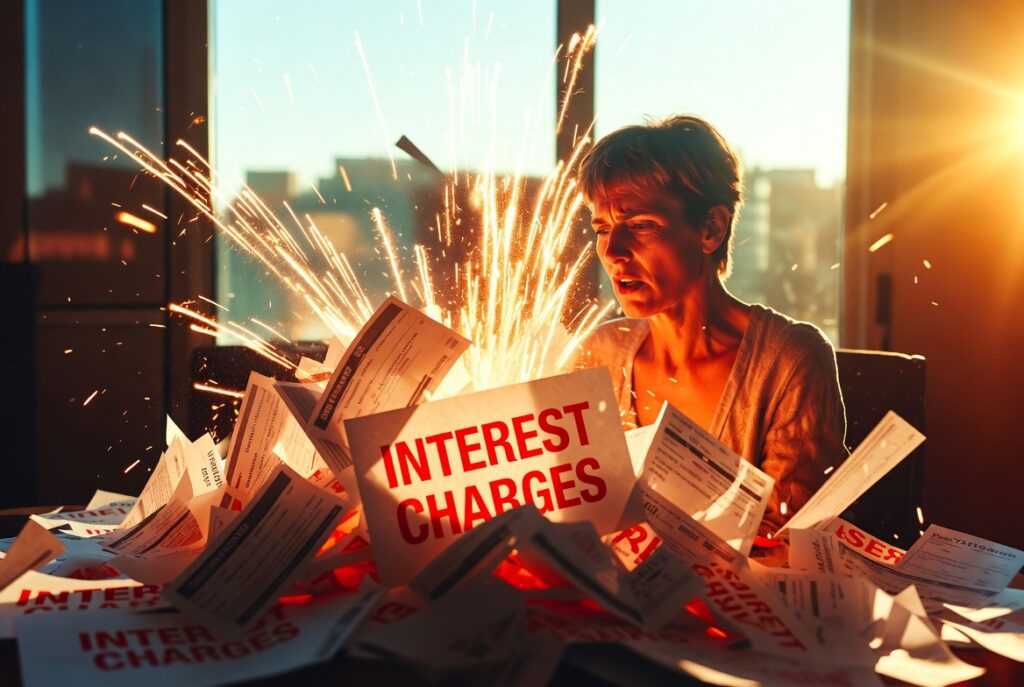
Using credit cards and only making bare minimum payments is another crazy mistake broke people make with money. They spend and spend, but don’t pay it down, and the balance grows out of control.
This is why credit card companies LOVE broke people. Since interest rates can be 20% or higher, if you don’t pay it off quickly, it means you pay WAY MORE than the original price.
Real example: Jamal uses his high interest credit card for groceries, gas, food, drinks, lunch, and golf. After six months, he owes $4,000 AND $120 a month in interest. If he stops using it and pays $200 a month to get the balance down to $0, it’ll take him 4.5 years and he’ll pay $6000 in interest! That’s a total of $10,000 because he didn’t just use his cash or debit card for things that weren’t emergencies OR prioritize paying his credit card off.
Fix it: Pay more than the minimum amount due or pay them completely off every 30 days. STOP USING THE CARDS until they are paid off. When using credit cards, PAY THEM OFF BEFORE THE INTEREST HITS so you’re not paying back money you didn’t even spend.
Mistake #5: Buying Expensive Cars
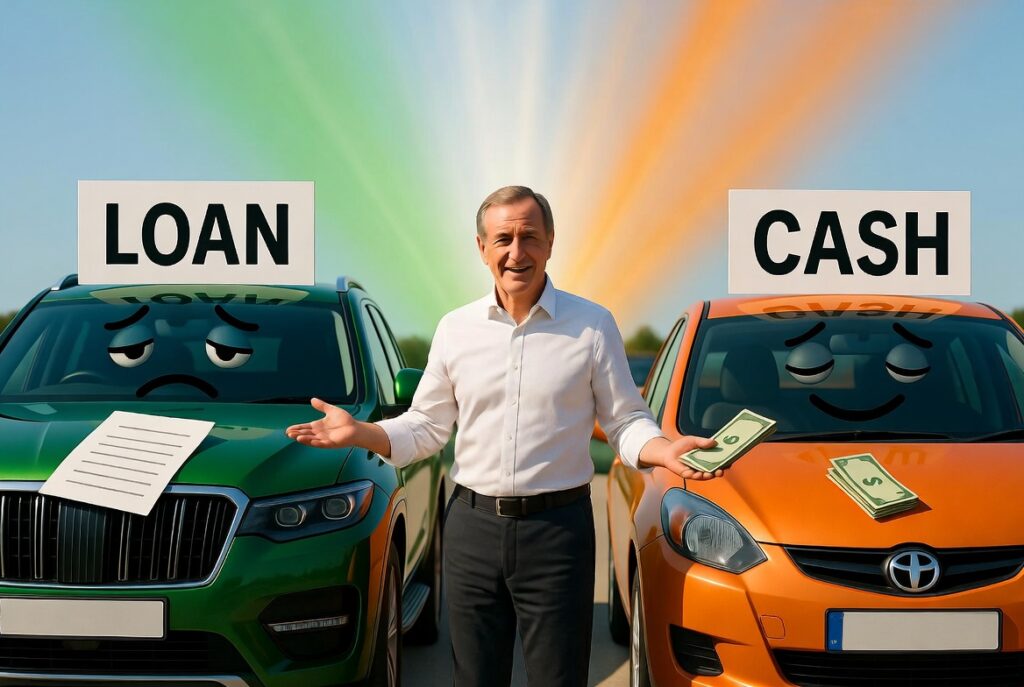
Broke people buy new or fancy cars they can’t afford to LOOK like they can afford them. They like how it looks, the monthly payment seems low, or it makes them look wealthy. But cars lose value FAST, and the payments eat into future money.
This broke people mistake is huge because it ties up cash FOR YEARS.
Real example: Tyler bought a $35,000 truck with a six-year loan. Three years later the truck was worth $18,000, but he still owed $22,000. This called being “upside down” on your vehicle. You owe more than it’s worth. The smartest way to avoid it is less expensive vehicles, bigger down-payment, and paying more than the minimum payment.
Fix it: Buy a reliable used car you can pay for in cash or with a short loan. Keep it longer. The money you save on payments can go toward your savings, emergency fund, or paying off debt.
Mistake #6: Impulse Buying
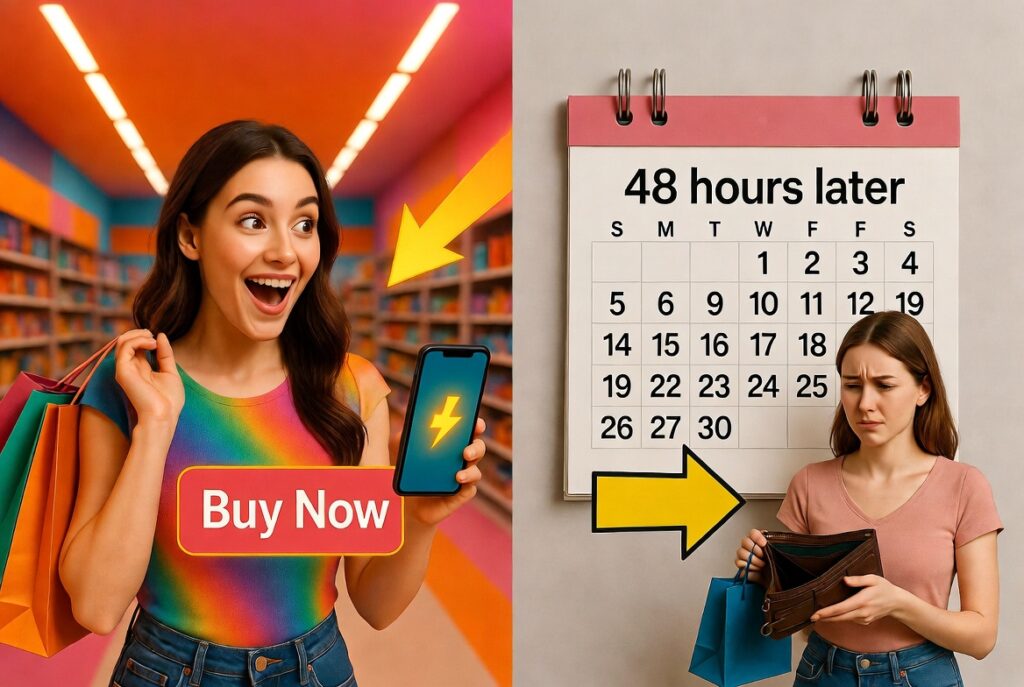
Broke people buy things without thinking because it feels good. Instead of listening to their logic and remembering they need to have their income and expenses on point, they listen to their emotions and feelings. Their logic says to do boring, mature, and responsible things. Their emotions say to have fun, get rewards, and chase dopamine.
They see an ad, walk into a store, or scroll online and impulsively give money away instead of taking the time to consider whether or not they really need it. They’re in the store to get things they NEED and can’t resist buying things they WANT because the store has targeted them. The store DELIBERATELY places items in specific places and at specific eye levels that are hard to miss. Shelf strategy is literally a science.
Impulse buying is sneaky because those $10, $20, and $50 purchases add up to thousands of dollars unecessarily spent every year.
Real example: Maria spends at least $50 on clothes or gadgets every weekend. Over a year, that’s $2,600, or more, she could save instead of wasting on excitement and emotions.
Fix it: Use the 48-hour rule. If you want something over $20, wait two days. Most of the time, the urge goes away and you realize you don’t need it. Instead of going into stores blind and without knowing EXACTLY what you need, make a shopping list, move quickly from one item to the other, and get out of there. You’re more likely to buy things you don’t need when you’re unsure of what you need and you’re taking your time.
Mistake #7: Not Saving or Investing for the Future

Broke people think, “I’ll save when I make more money.” Instead of starting small, they spend everything now and miss out on compound growth.
This broke people mistake keeps them working longer and worrying more about retirement.
Real example: David is 35 with $400 in savings. His coworker, who has saved $100 a month since age 22, already has over $30,000. The small, consistent deposits into your savings, or just simply not spending your money, adds up WAY faster than you think and it’ll save your ass in a bind or bad situation.
Fix it: Start with what you can realistically afford. Even if it’s only $20 a week. But, if you can do more and YOU KNOW IT, then do it. Don’t make excuses about what else you need the money for. The other stuff won’t help you in the future. Put it in a high-yield savings account or low-cost index fund. Small amounts grow big over time because as they make interest, AND YOU DON’T TOUCH IT, that interest gets added onto the principle. Once added to the principle, that total amount makes even more interest and the process keeps repeating itself. Every month you’ll make interest on a higher amount of money because it compounds over time.
Mistake #8: Keeping Up With Friends and Family

Broke people try to match the lifestyle of the people around them. They buy expensive cars, bigger homes, and expensive clothes, go on trips, buy the latest phone, or go out more often to fit in. This is called lifestyle inflation or lifestyle creep.
It feels good, short-term, but leaves you with NOTHING because you can’t afford it the way they can. Realistically, they probably can’t afford it either and they’re just flexing to keep up with other people – which is usually the case.
Real example: Chris sees his friends YOLOing, acting like they’re rich, and posting vacation photos. Since he doesn’t want to look like a lame, boring loser, and he doesn’t know what their finances REALLY look like, he books an expensive trip on a credit card so he can LOOK like he’s balling out as well. The truth is, he’s not a baller. He’s broke and using other people’s money for fun, entertainment, and attention. Since he made a big financial decision based on feelings and not login, now he has to spend the next eight months to a year paying it off.
Fix it: Focus on yourself, your lifestyle, and your own goals. Even though other people might look cooler and better than you, there’s a 70% chance they’re just financial morons wanting attention. Be honest with friends: “I’m fixing my money right now and I can’t afford dumb, unnecessary shit.” Real friends will understand, respect, and admire your logic, intelligence, and maturity.
Mistake #9: Paying Only the Minimum on Debt
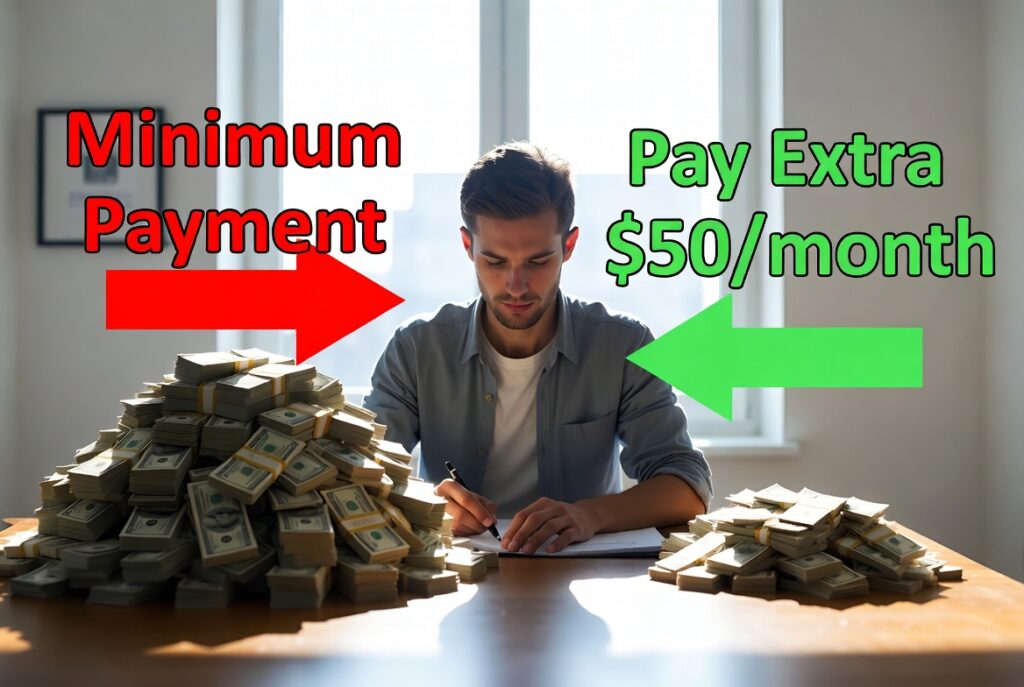
Only paying the bare minimum is a broke people mistake that keeps them in debt forever. What you don’t know is minimum payments cover MOSTLY interest, so the balance barely drops. Since broke people don’t do the math, they think the minimum payment is a great deal.
How broke people think it works: If your minimum payment is $500 a month, the balance is $2,300, and the interest is 20%, you might think it’ll take 6 months, at most, to pay it off, right? Not exactly. It’s only a “one time” 20% interest charge of the total balance that gets added to the principal, right? Hahahaha NOPE. You poor thing. Here, put this helmet on and go eat this crayon in the corner of the room, okay?
Here’s how it ACTUALLY works (unfortunately): A $2,300 balance at 20% interest and a $500 per month minimum payment, that means $460 of your payment goes to interest and ONLY $40 goes to the principal. So, after you make your payment, EVEN THOUGH YOU PAID $500, your balance is now $2,260. When you make your next payment, $452 goes to interest and only $48 goes to principal.
THAT’S WHY IT’S IMPORTANT TO PAY MORE than just the bare minimum! The more you get the principal down, the less you pay in interest. You only pay the least when you use the least brain power.
Real example: Rachel has $12,000 in student loans. Minimum payments will take her 23 years and cost an extra $9,000 in interest. $21,000 total. That sucks. Just an extra $100 per month can cut her payments down by years and cut the interest nearly in half.
Fix it: Pay extra when you can. Even if it’s only $50 more a month. Use any extra cash from raises or tax refunds to knock down the principal faster.
Mistake #10: Ignoring Small Daily Money Leaks

Broke people say, “It’s only $5.” But those $5 – $7 lattes, $15 – $20 streaming services, and bank fees add up faster than they think. They ignore the details and wonder why their bank account is empty and they’re broke. It’s like having a leak in the bottom of a boat and, instead of fixing the hole, you just keep scooping the water out because it’s not a huge deal and you’re used to it. It’s smarter just to take the extra time and effort to fix it.
Real example: Ben spends $7 on energy drinks every day. That’s $1,800 a year he doesn’t notice.
Fix it: Review your bank statement every month and document every expense on a spreadsheet. Not only will you THINK about what you’re buying because you have to take the time to add it to the sheet, but you’ll also be able to add up the numbers and think about what it could have been used for instead. Cancel unused subscriptions, make coffee at home, and get more sleep. Small changes add up to BIG savings.
How to Stop Making These Mistakes

You don’t have to fix all ten broke people mistakes at once. Pick one or two that hit your money the hardest and work on them this month. Track your progress. After 90 days, you will see real change.
The biggest difference between broke people and people with money is simple: they don’t repeat the same money mistakes once they learn about them. They get the information, realize how dumb they’ve been, make adjustments, and keep moving forward.
Start today. Write down one small change you will make this week. Share this article with a friend or family member who needs it. The more people that can break these habits, the more people who finally get ahead and fix their money – and you’ll have a hand in helping them.
You have the power to fix your money. Stop these mistakes broke people make with their money and start building the life you want. It’s not too late. Let’s do this, Brutus!